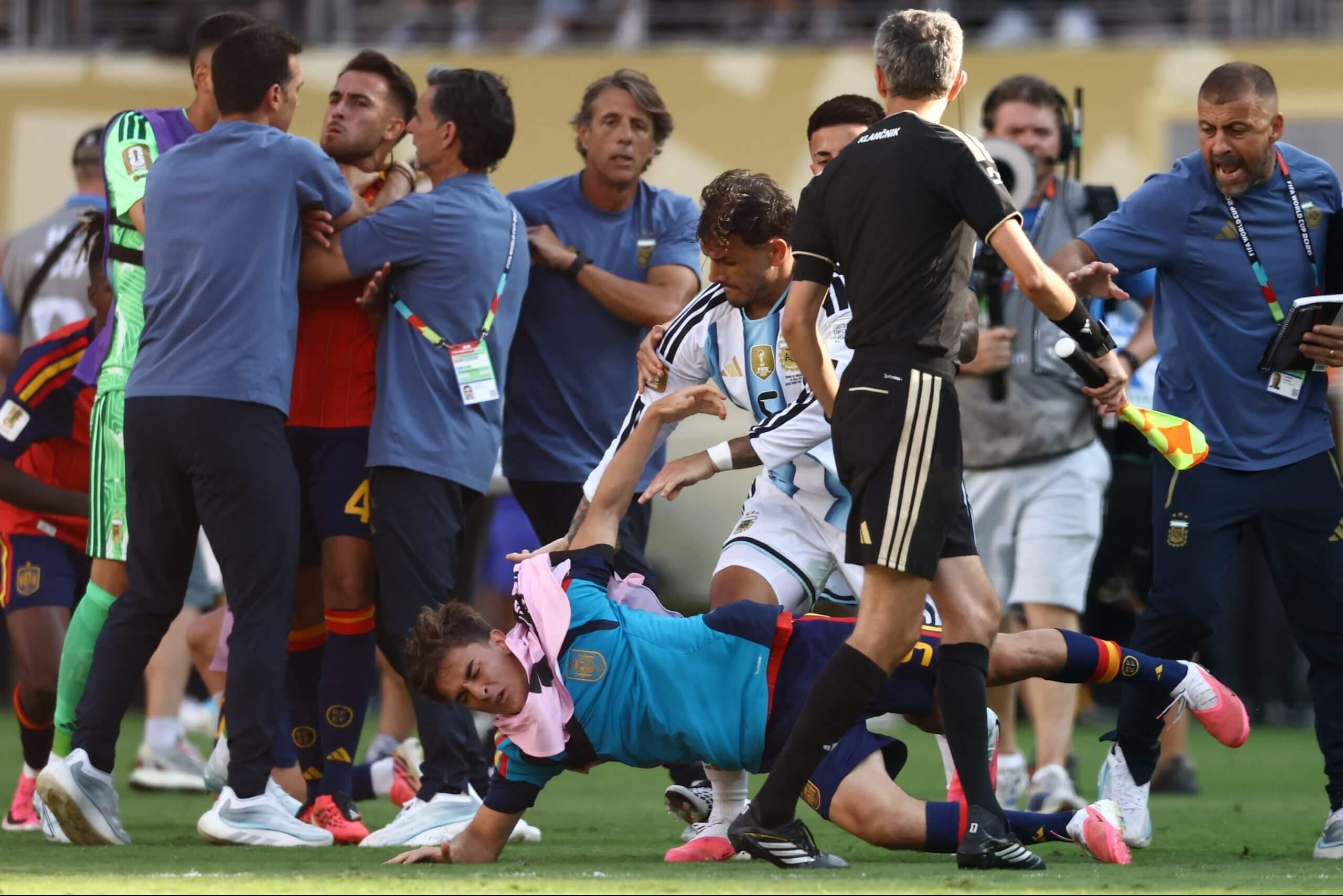
Argentina disgraced themselves, and the World Cup final, with their charmless petulance
Quick summary
An editorial criticism of Argentina's behavior in the 2026 World Cup final, condemning their fouls and petulance as a disgrace to the occasion.
Full article
Attributed to original sourceArgentina's passion was an asset but too often in this World Cup it has spilled over into distasteful aggression
Source attribution: this article content is based on the linked publisher feed/source. Chance adds independent soccer context, impact analysis, entity links, and related news.
What happened
This New York Times editorial piece critiques Argentina's conduct during the 2026 World Cup final, arguing that their aggressive play, fouls, and petulance tarnished both their own reputation and the prestige of the tournament's showpiece match. The article characterizes the performance as charmless and damaging to the spectacle of the World Cup final. It is an opinion piece rather than a match report, framing Argentina's on-field behavior as a source of shame rather than competitive intensity.
Chance analysis
Editorial coverage criticizing a World Cup finalist's conduct carries reputational weight but limited predictive value. For match prediction systems, the relevant takeaway is contextual: Argentina's perceived indiscipline in a major final may color narratives around their identity and style heading into subsequent tournaments, but it does not directly affect upcoming fixtures. The piece serves more as media narrative-setting than as actionable intelligence.
Negative reputational impact on Argentina's image following the 2026 World Cup final, with potential narrative consequences in future tournament coverage.
Argentina's perceived indiscipline in the 2026 World Cup final is reputationally damaging but does not materially affect near-term match predictions.