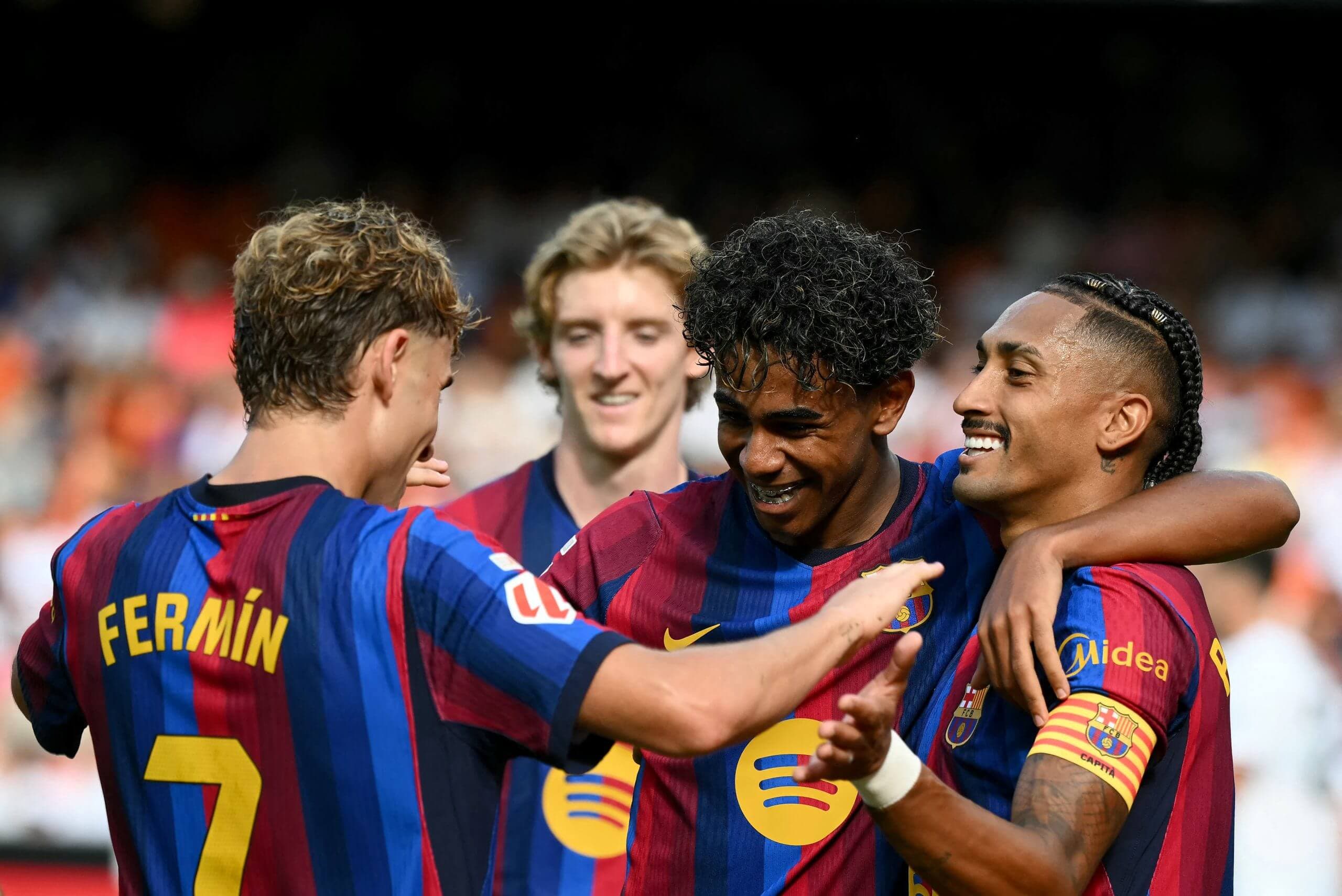
Barcelona scoring for fun in La Liga: who needs a new No. 9?
Quick summary
The Athletic examines how Barcelona are thriving without a traditional centre-forward, with Raphinha and Lamine Yamal leading a free-flowing attack under Hansi Flick.
Full article
Attributed to original sourceSunday's 5-0 win at Valencia took the team's tally to 17 goals from their first four La Liga matches this term
Source attribution: this article content is based on the linked publisher feed/source. Chance adds independent soccer context, impact analysis, entity links, and related news.
What happened
Barcelona have started La Liga in prolific form, spreading goals across the squad rather than relying on a focal No. 9. Raphinha and Lamine Yamal have been central to Hansi Flick's fluid system, which prioritises movement, width and creativity over a fixed striker. The piece frames this as a philosophical statement: under Flick, Barcelona's identity is being reshaped away from the traditional 9 role that the club has pursued in recent transfer windows. The question posed is whether the need to sign a marquee striker still applies given how well the current configuration is working.
Chance analysis
Barcelona's early-season form under Hansi Flick is reinforcing a tactical identity built around positional fluidity rather than a conventional centre-forward. With Raphinha operating in a central attacking role and Lamine Yamal providing creativity from the right, the team is generating goals from multiple sources — a system that directly questions the club's long-running pursuit of a marquee No. 9. For fans, this is a meaningful stylistic statement: Flick's Barcelona may not look like Guardiola's or even Xavi's, but it is producing results and entertainment in equal measure. The broader implication is that Barcelona's transfer priorities could shift, with squad balance and depth taking precedence over a headline striker signing.
Barcelona's tactical flexibility and goalscoring depth under Flick are elevated, potentially reducing urgency to sign a traditional centre-forward in the near term.