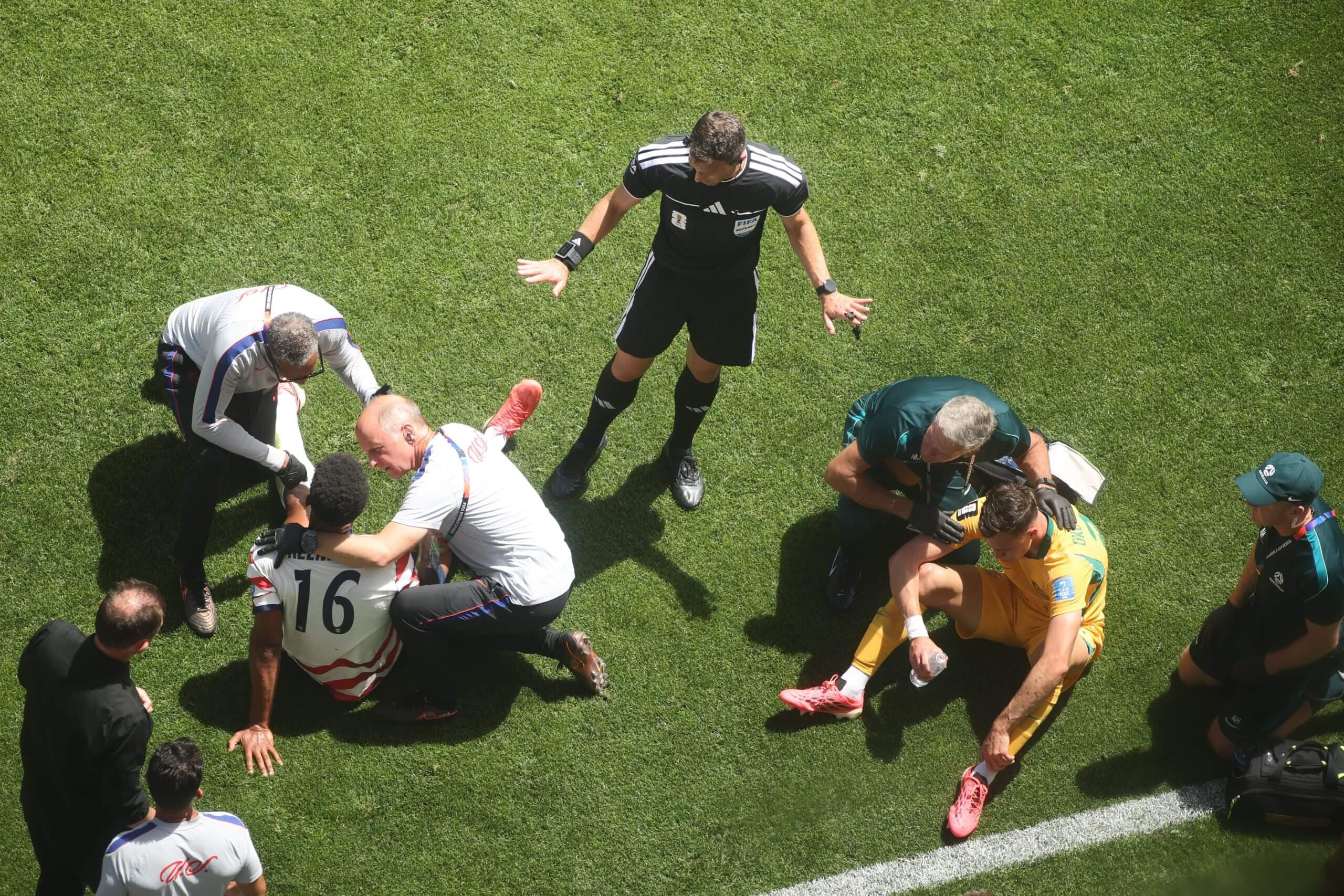
FIFA's World Cup concussion protocols under fire after USA incident with Alex Freeman
Quick summary
FIFA's concussion protocols during the 2026 World Cup are facing criticism after an incident involving USA defender Alex Freeman, with experts warning that players remain at risk under current procedures.
What happened
An incident involving USMNT player Alex Freeman during the 2026 FIFA World Cup has reignited scrutiny of FIFA's concussion protocols. Medical experts and former players are voicing concerns that the current guidelines do not adequately protect athletes from the dangers of head injuries. The controversy centers on whether FIFA's in-match assessment procedures are rigorous enough to detect and manage concussions in real time. Critics argue the existing framework lags behind standards adopted in other contact sports and is exposing World Cup players to unnecessary long-term health risks.
Chance analysis
Concussion protocol scrutiny is a governance and player welfare issue that could pressure FIFA to revise in-match medical procedures mid-tournament. For team management, this raises the stakes on how national federations handle head injury assessments and return-to-play decisions. In practical terms, teams may become more cautious with players who sustain head impacts, potentially affecting availability decisions and substitutions in tight matches.
Increased scrutiny may lead to stricter head injury assessments and earlier removals of affected players during World Cup matches, potentially affecting team availability and tactical decisions.
Monitor FIFA for any mid-tournament protocol changes and assess whether teams adopt more conservative substitution patterns for head injury incidents.