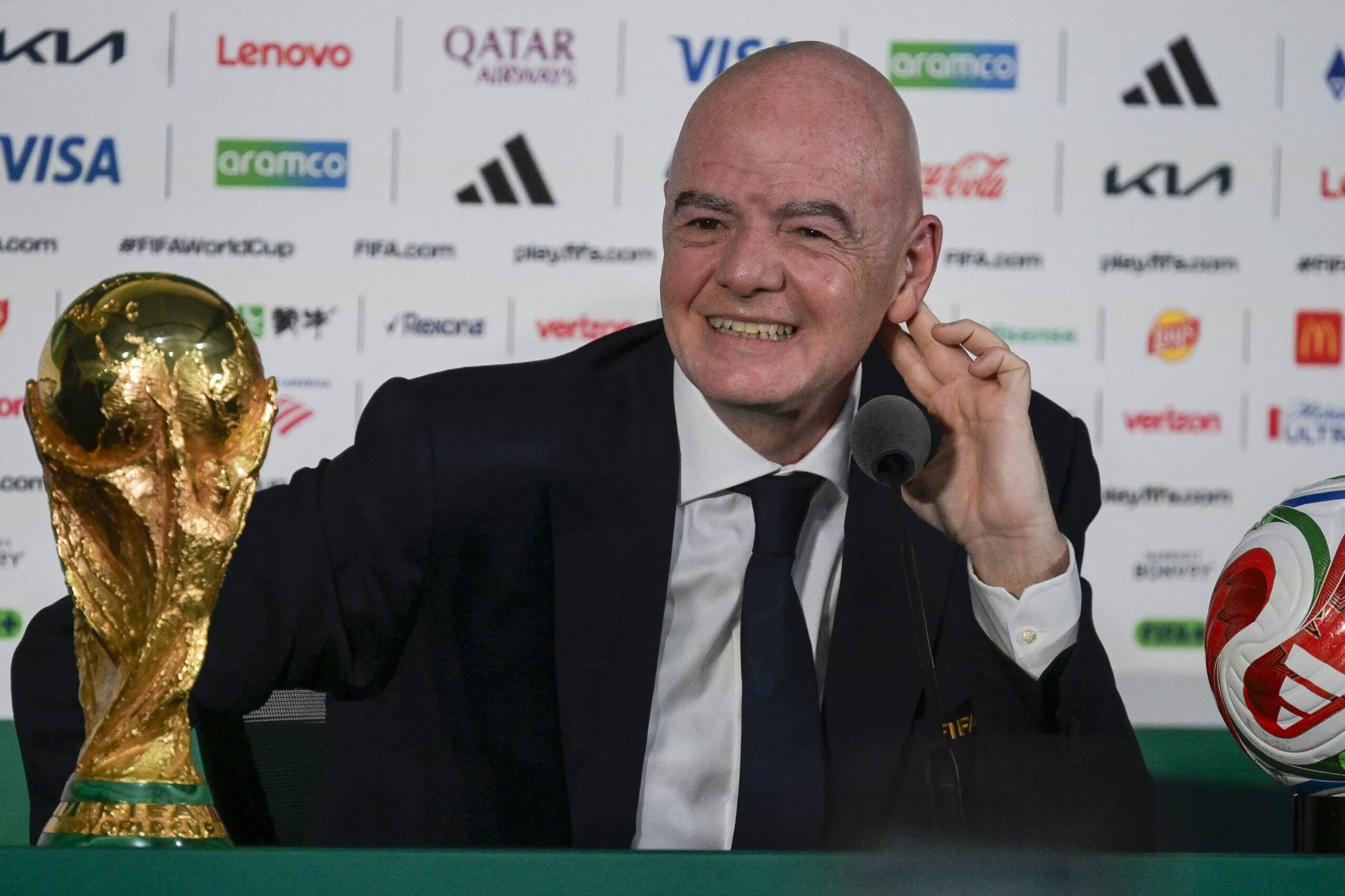
FIFA to examine 64-team World Cup expansion before 2030 tournament
Quick summary
FIFA President Gianni Infantino has confirmed the organization will study expanding the World Cup to 64 teams ahead of the 2030 edition, up from the 48-team format debuting at the 2026 tournament.
Full article
Attributed to original sourceThe competition has been expanded to a 48-team format for the current 2026 finals, with FIFA now considering adding a further 16 nations.
Source attribution: this article content is based on the linked publisher feed/source. Chance adds independent soccer context, impact analysis, entity links, and related news.
What happened
FIFA will formally examine whether to expand the World Cup from 48 to 64 teams before the 2030 tournament, according to President Gianni Infantino. The 2026 World Cup in the USA, Canada, and Mexico will be the first to feature 48 teams, and Infantino has previously floated the idea of further expansion. The 2030 tournament is unique as it will be hosted across three continents (Spain, Portugal, Morocco) with centenary celebration matches in Argentina, Paraguay, and Uruguay. A 64-team format would further increase qualification opportunities for smaller nations but raise concerns about competitive quality and tournament duration.
Chance analysis
A 64-team World Cup would be a structural shift with significant implications for international football calendars, qualification pathways, and competitive balance. More teams means more matches, more broadcast inventory, and more revenue, but also a diluted group stage and logistical strain. From a prediction standpoint, expanded formats generally increase upset variance and shift qualifying dynamics for lower-ranked federations. The 2030 edition's unique multi-continental hosting makes it a natural moment for format experimentation.
If adopted, the 64-team format would reshape FIFA's flagship competition by broadening access, extending the tournament, and potentially altering competitive balance starting in 2030.
If 64 teams is approved, 2030 World Cup qualification models and match prediction frameworks must account for greater group-stage parity and more low-ranked entrants.