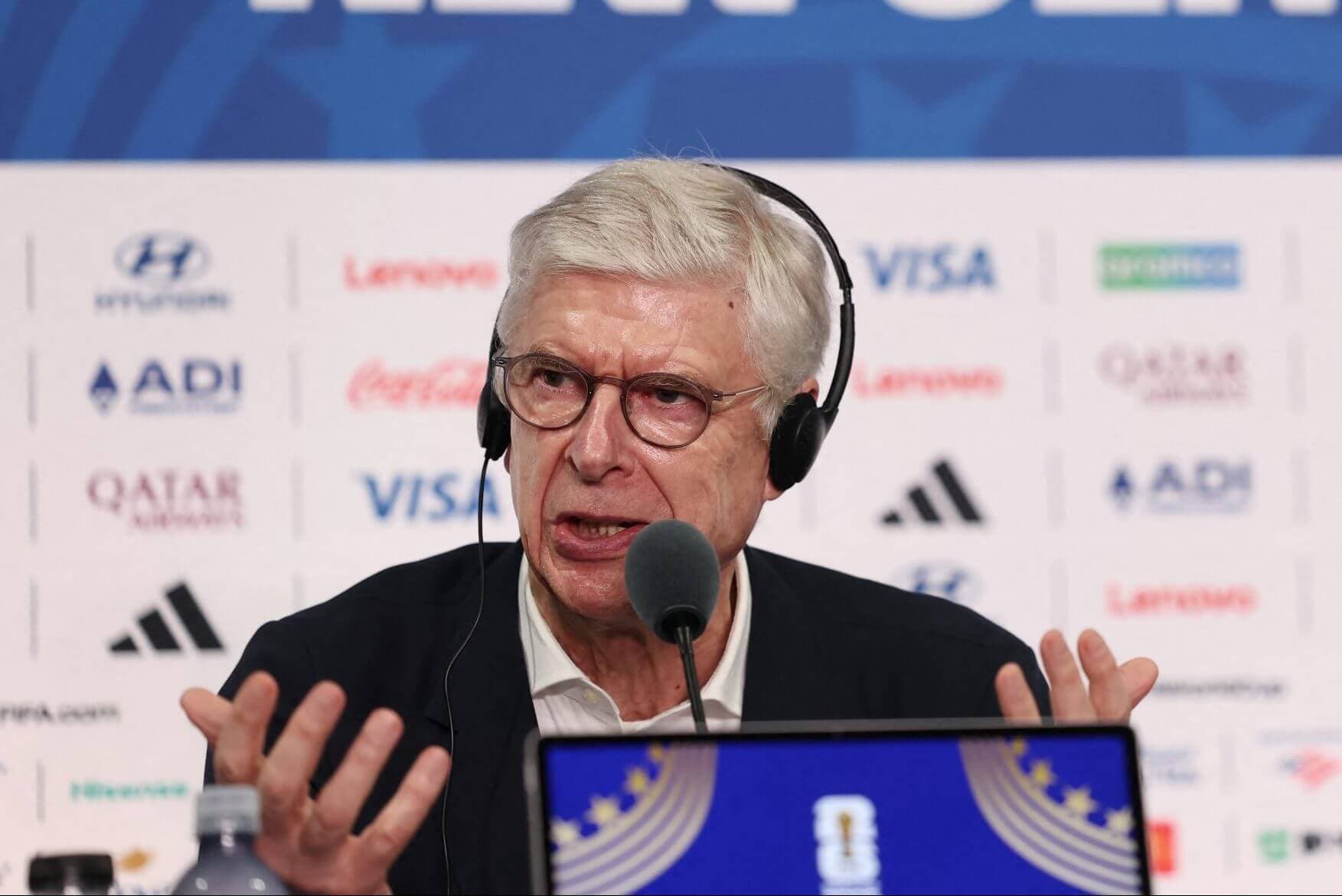
FIFA to review impact of World Cup hydration breaks, says Arsene Wenger
Quick summary
FIFA's Chief of Global Football Development Arsene Wenger confirmed the governing body will review the impact of hydration breaks used at recent World Cups, with potential changes ahead of the 2026 tournament.
Full article
Attributed to original sourceThe introduction of hydration breaks at this summer's tournament has sparked criticism.
Source attribution: this article content is based on the linked publisher feed/source. Chance adds independent soccer context, impact analysis, entity links, and related news.
What happened
FIFA is set to assess whether hydration breaks should remain a feature of World Cup matches going forward. Arsene Wenger, speaking in his role as FIFA's Chief of Global Football Development, indicated that the governing body will formally review the impact of cooling breaks on match flow, player welfare, and competitive integrity. The review could shape how matches are officiated at the 2026 World Cup in North America, where summer heat conditions are expected to be a major concern. No concrete rule change has been announced yet, with the evaluation still in its early stages.
Chance analysis
Hydration breaks were introduced primarily to mitigate heat-related risks, but they also disrupt match rhythm and can shift tactical momentum. A formal FIFA review signals that the policy may be refined, potentially adjusted, or expanded depending on the data collected. For the 2026 World Cup, where matches in venues across the US, Mexico, and Canada could face extreme summer temperatures, the outcome of this review has direct implications for match preparation, in-game tempo, and broadcast strategy. Clubs and national teams will monitor any rule shift closely to recalibrate tactical approaches during scheduled breaks.
Potential adjustment to match-interruption rules at the 2026 World Cup, with marginal effects on game flow and player conditioning strategies.
Monitor FIFA's hydration break ruling for the 2026 World Cup; expect possible changes to in-game stoppage frequency that could affect match tempo modeling.