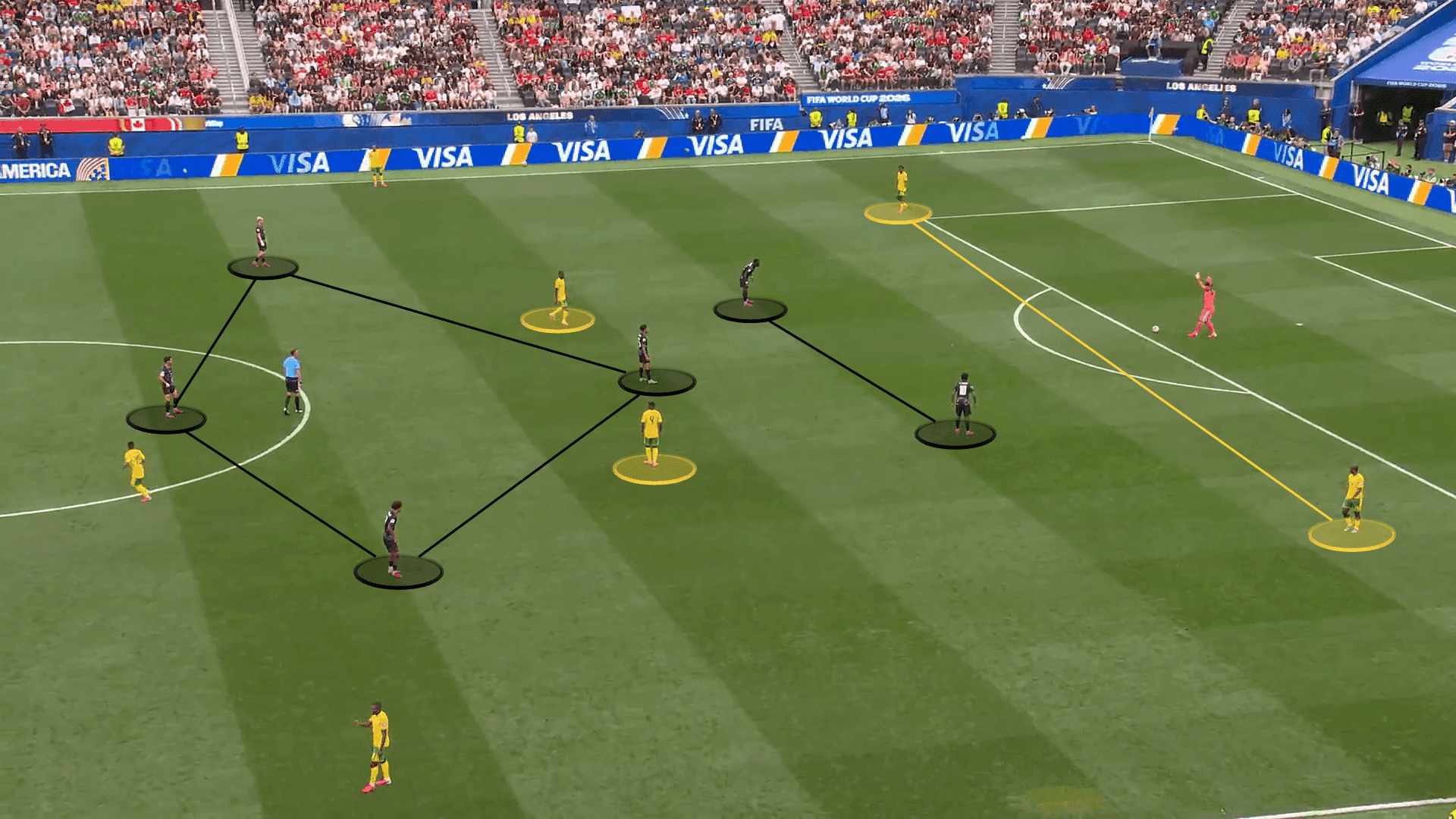
How Canada claimed historic win by letting South Africa's goalkeeper have the ball
Quick summary
A tactical analysis of Canada's World Cup victory over South Africa, highlighting their strategic decision to allow South Africa's goalkeeper possession as part of a deliberate pressing structure.
Full article
Attributed to original sourceCanada pressed high and aggressively during the group stage, but sitting back was what helped them win in Los Angeles
Source attribution: this article content is based on the linked publisher feed/source. Chance adds independent soccer context, impact analysis, entity links, and related news.
What happened
The Athletic provides a detailed tactical breakdown of Canada's historic win against South Africa, focusing on their unconventional approach of letting the South African goalkeeper have the ball. The analysis examines how Canada's defensive shape and pressing triggers exploited South Africa's buildup patterns. The piece details specific tactical adjustments and spatial control that allowed Canada to dictate the tempo while absorbing pressure in certain zones before springing attacks.
Chance analysis
This is a high-quality tactical analysis of an international match, illustrating how a lower-possession team can impose control by deliberately ceding possession to an opponent's goalkeeper while maintaining structural discipline. For prediction systems, it highlights that possession statistics alone don't capture game control — Canada's approach was about zone-based dominance rather than ball retention. The piece offers a framework for understanding pressing structures and buildup-phase vulnerabilities.
Canada's tactical identity gains a high-profile template; South Africa's buildup-phase weaknesses are exposed for future opponents to study.
A team that intentionally allows the opposition goalkeeper possession can still dominate territory and game state; possession % is not a reliable proxy for control.