Malagò surprised by 'incredible' attempts to block FIGC role
Quick summary
Giovanni Malagò expressed astonishment at efforts to obstruct his potential involvement in the FIGC leadership, describing the attempts as 'incredible'.
Full article
Attributed to original sourceFIGC President Giovanni Malagò admits he’s surprised by the continuing attempts to block his appointment over legal grounds. ‘It’s incredible’ and could damage Italy’s EURO 2032 hosting dossier.
The 67-year-old won the election to be named President of the Italian Football Federation on June 22.
However, there have been several appeals lodged by those trying to block his appointment , claiming that he was lacking the necessary paperwork and history with the FIGC to secure the leadership.
He had previously been special commissioner of the FIGC for a month in 2018, but spent most of the last few decades at the helm of the CONI (Italian Olympic Committee), which oversees all Italian sport.
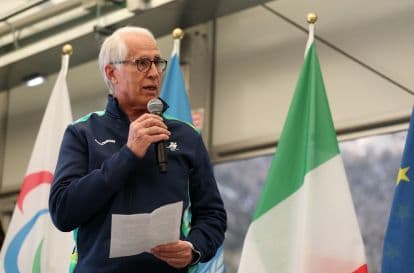
Malagò stunned by legal battle CORTINA D’AMPEZZO, ITALY – MARCH 5: Giovanni Malago, President of the Organising Committee for the 2026 Olympic and Paralympic Winter Games, speaks during the mural inauguration ahead of the Milano Cortina 2026 Winter Paralympic Games at the Cortina Paralympic Village on March 05, 2026 in Cortina d’Ampezzo, Italy. (Photo by Linnea Rheborg/Getty Images for IPC) “It is honestly incredible, because it’s not even a legal block, it’s an interpretation of the rules, and it is strange that this is interpreted in this way only for my case,” Malagò told reporters at an event.
“I expected one, two or three appeals, but that at a certain point they’d stop. In some ways, it’s an affectionate obsession with me, but I am very calm.”
It has been a complicated start to the job for Malagò, who had tried to appoint Paolo Maldini and Leonardo as technical directors of the Italy squad, but they resigned after the failure to choose their preferred candidate as coach.
Italy technical director Paolo Maldini, special advisor Leonardo, FIGC President Giovanni Malagò and Lega Serie A President Ezio Simonelli (figc.it) Instead, he brought back Roberto Mancini as CT, with Claudio Ranieri taking the technical director position, assisted by Gianfranco Zola.
“We’ve been accustomed to difficulties in Italy, but there have been some good things in the last two months. I see enthusiasm and synergy between Ranieri, Zola and Mancini, then we’ll see what happens on the field.”
ROME, ITALY – DECEMBER 15: CONI President Giovanni Malago’ attends the Italian Olympic Commitee ‘Collari d’Oro’ Awards ceremony on December 15, 2015 in Rome, Italy. (Photo by Paolo Bruno/Getty Images) Malagò was asked if the on-going controversy over his status as FIGC President could potentially damage the Italy co-hosting preparations for the EURO 2032 tournament, shared with Turkiye, he admitted this was unclear.
“It’s a very good question. If I said no, I would not be honest, but if I said yes, it would be a mistake because I don’t want to get anyone worried.”
Source attribution: this article content is based on the linked publisher feed/source. Chance adds independent soccer context, impact analysis, entity links, and related news.
What happened
Italian sporting establishment figure Giovanni Malagò, currently president of CONI, has publicly voiced surprise at what he termed 'incredible' attempts to prevent him from taking a leading role within the FIGC (Italian Football Federation). The comments highlight ongoing political tensions within Italian football governance, as figures across the sporting and political spectrum maneuver ahead of key FIGC decisions. While no specific candidates for FIGC positions were named in detail, the controversy signals an unsettled period for the organization that oversees Italian professional and amateur football.
Chance analysis
Leadership disputes at the FIGC matter far beyond backroom politics: the federation sets the calendar, referees, licensing rules, and development pathways for Italian football at every level. When senior figures like Malagò publicly air frustration about being sidelined, it points to a fractured governance environment that can delay decisions on reform, broadcasting deals, and youth investment. For clubs and players, prolonged instability at the top often translates into uncertainty around competition structure and regulatory direction.
The political maneuvering at FIGC is unlikely to produce on-field effects in the short term but may delay governance reforms and policy decisions in Italian football.