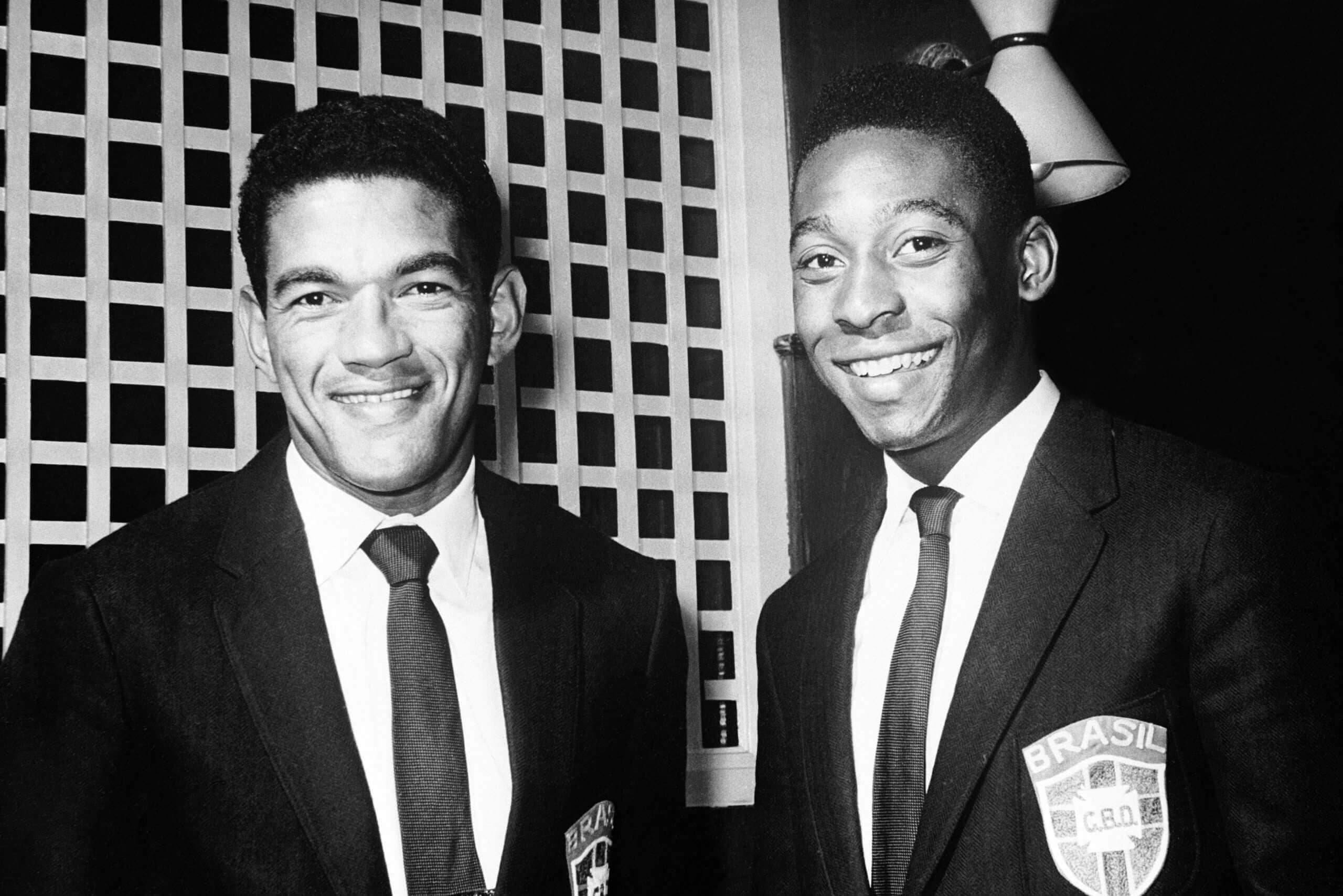
The 64-Year-Old Story of the Last World Cup Dismissal That Didn't Lead to a Ban
Quick summary
A retrospective feature revisiting Garrincha's 1962 World Cup red card — the last World Cup sending-off that did not carry an automatic suspension — connecting it to a more recent dismissal involving Folarin Balogun.
Full article
Attributed to original sourceThe overturning of Balogun's suspension was remarkable, but there was some very historical precedent
Source attribution: this article content is based on the linked publisher feed/source. Chance adds independent soccer context, impact analysis, entity links, and related news.
What happened
This long-form feature revisits Garrincha's infamous 1962 World Cup dismissal against Chile, which did not result in a match ban due to the tournament's rules at the time. The piece draws a parallel to a modern World Cup red card involving US international Folarin Balogun, exploring how FIFA disciplinary frameworks have evolved over the past 64 years. It examines the historical context of World Cup suspensions, rule changes, and how what was once the norm (a red card without a ban) is now virtually impossible under current regulations.
Chance analysis
This is an evergreen historical piece that contextualizes a current disciplinary moment within World Cup history. It has limited predictive value for upcoming matches but offers useful background on how FIFA's disciplinary regime has tightened over decades. For prediction systems, the key takeaway is that modern World Cup red cards almost always carry suspensions, making any current sending-off a near-certain absence for subsequent fixtures.
No direct impact on upcoming matches — the article is a historical retrospective with no bearing on current team selection or competition outcomes.
Treat any current World Cup red card as a guaranteed multi-match ban; the no-ban precedent is purely historical.