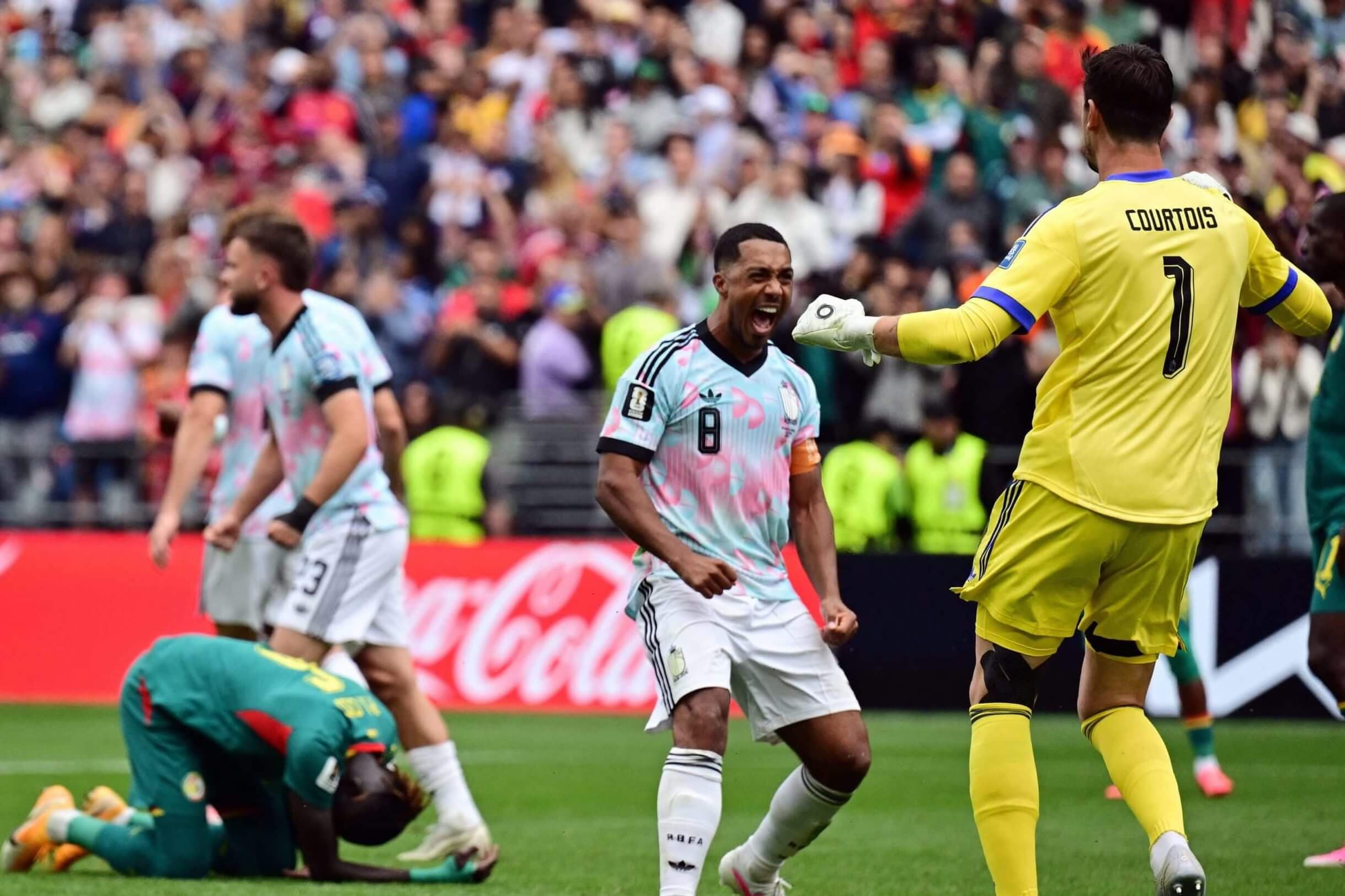
The anatomy of a World Cup implosion: 40 minutes that broke Senegal and revived Belgium
Quick summary
A tactical breakdown of a 40-minute period in a World Cup match that saw Senegal collapse while Belgium mounted a revival, analyzing the key moments and decisions that shifted the game.
Full article
Attributed to original sourceA crazy end to an already dramatic last-32 tie saw an historic comeback and a heartbreaking collapse
Source attribution: this article content is based on the linked publisher feed/source. Chance adds independent soccer context, impact analysis, entity links, and related news.
What happened
This detailed analysis dissects a critical 40-minute stretch in a World Cup fixture between Belgium and Senegal, during which Senegal's structure disintegrated and Belgium found renewed energy and momentum. The piece examines tactical adjustments, individual errors, psychological shifts, and the specific phases of play that defined the turnaround. It serves as a case study in how quickly World Cup knockout-stage dynamics can shift, with Belgium capitalizing on Senegal's defensive and midfield disorganization to mount a decisive response.
Chance analysis
The article highlights the fragility of high-stakes tournament football, where a single 40-minute window can completely reshape a match's trajectory. For prediction systems, it underscores the importance of in-game momentum modeling, psychological resilience factors, and the ability of experienced squads (Belgium) to exploit structural collapse. The Senegal collapse likely reflects either fatigue, tactical naivety, or loss of midfield control, while Belgium's revival signals effective halftime adjustments and depth of squad.
Belgium gains confidence and momentum in the tournament while Senegal faces a damaging psychological blow that likely ends their campaign or severely damages their knockout-stage prospects.
When modeling World Cup match outcomes, weight in-game momentum shifts, halftime tactical adjustments, and squad experience as significant swing factors rather than relying on pre-match form alone.