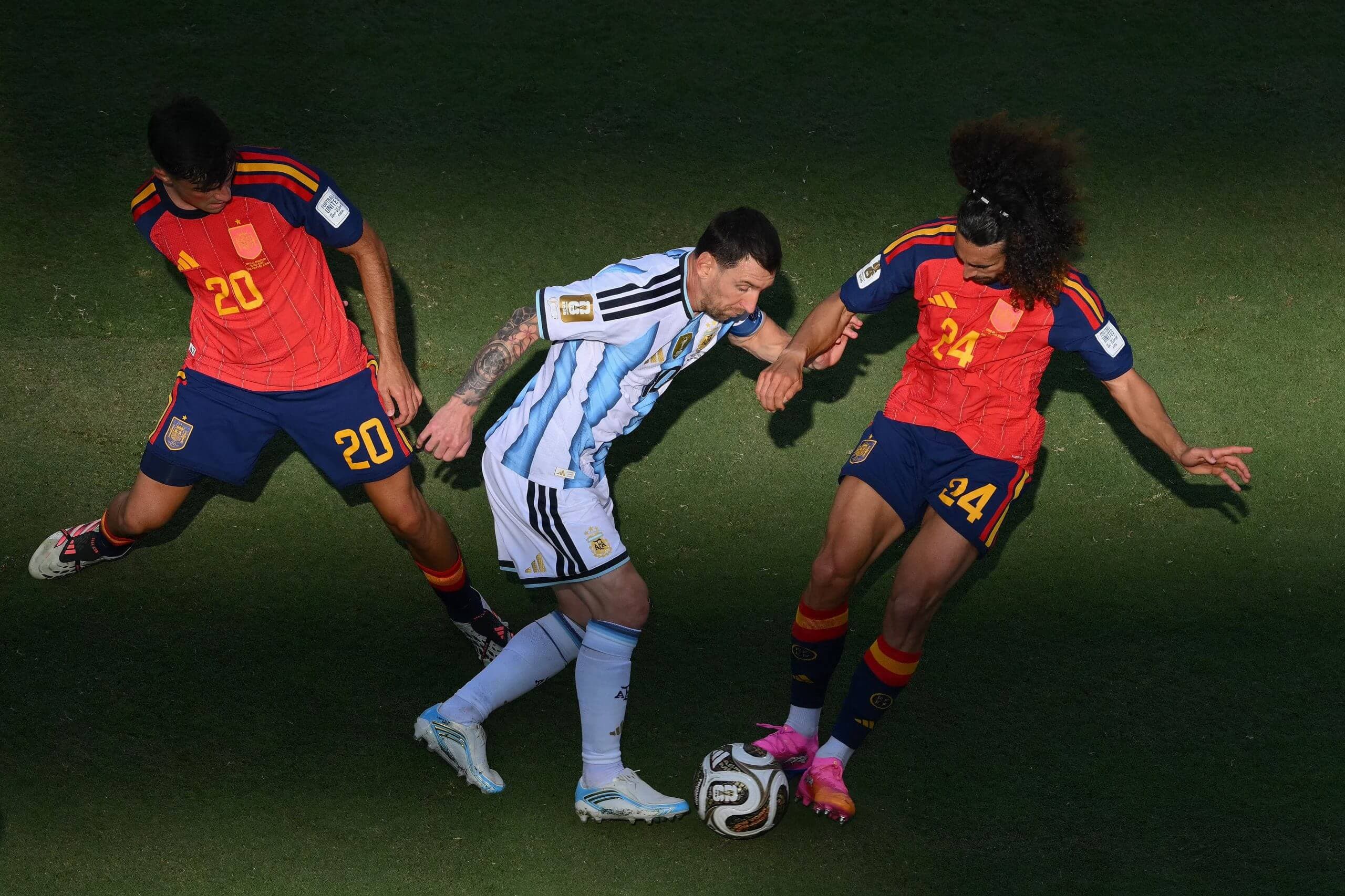
Why Argentina and Messi went nearly two hours without a shot in the World Cup final
Quick summary
Tactical analysis of the World Cup final between Argentina and Spain, explaining how Spain's press-counter structure neutralized Messi and Argentina's attack for nearly two hours.
Full article
Attributed to original sourceThe final was the finest example yet of Spain's ability to dominate both with and without the ball, with Argentina denied space throughout
Source attribution: this article content is based on the linked publisher feed/source. Chance adds independent soccer context, impact analysis, entity links, and related news.
What happened
The article dissects the tactical dynamics of the World Cup final between Argentina and Spain, focusing on how Spain employed a structured press-counter system that suffocated Argentina's build-up. Messi was largely isolated as Argentina struggled to progress the ball into dangerous areas, registering no shot for close to two hours. The analysis breaks down Spain's defensive lines, midfield traps, and transition patterns that prevented Argentina from establishing rhythm.
Chance analysis
This is a post-match tactical deep dive on a World Cup final, the highest-stakes game in international football. Spain's ability to nullify Messi — widely considered the greatest player of his generation — through collective pressing and midfield compactness is a significant tactical data point. For prediction systems, this highlights how elite tactical organization can override individual quality, and provides context for future matchups between teams with similar profiles (high-press counters vs. possession-heavy sides relying on a creative hub).
Argentina's attacking output was severely diminished by Spain's tactical setup, limiting Messi's influence and exposing structural weaknesses in Argentina's build-up phase.
Elite pressing structures can neutralize even the best creative players; teams relying on a single playmaker need secondary creation outlets against organized mid-blocks.