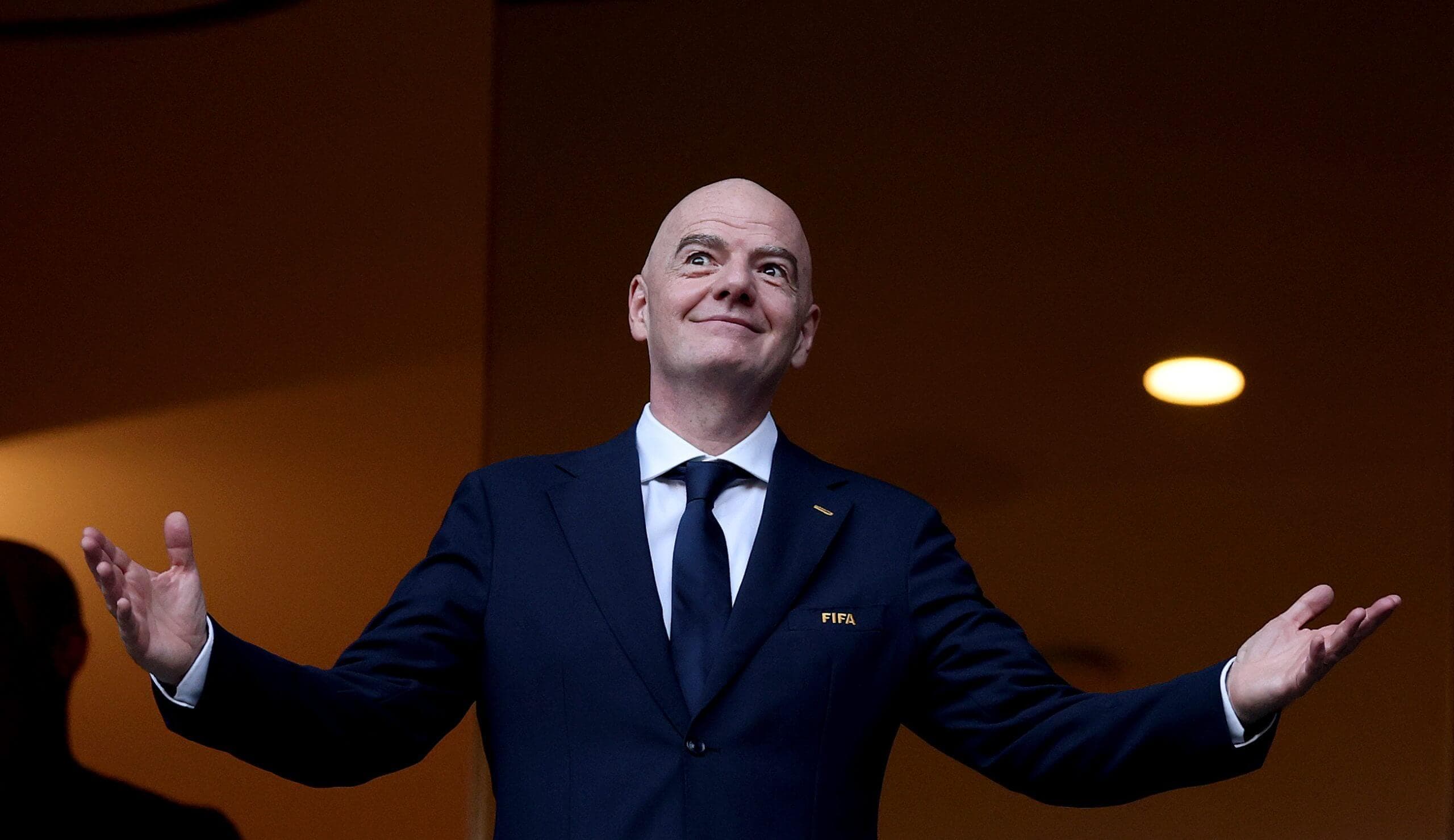
Will FIFA really push for a 64-team World Cup? How would it work?
Quick summary
FIFA President Gianni Infantino is reportedly considering expanding the World Cup from 32 to 64 teams, raising questions about feasibility, format, and competitive quality.
Full article
Attributed to original sourceComments from FIFA president Gianni Infantino suggest the topic will be explored before the next edition in 2030. But would it work?
Source attribution: this article content is based on the linked publisher feed/source. Chance adds independent soccer context, impact analysis, entity links, and related news.
What happened
The article examines the prospect of FIFA expanding the World Cup to 64 teams, a move reportedly favored by president Gianni Infantino. It explores how the format could work logistically, including potential changes to qualifying, group stages, and knockout rounds. The piece also weighs the sporting, commercial, and political implications of such a dramatic expansion, just as the 48-team version is set to debut at the 2026 World Cup in the US, Canada, and Mexico.
Chance analysis
A 64-team World Cup would fundamentally reshape international football's premier competition, diluting quality but massively expanding FIFA's commercial footprint and political influence. The timing — while the 2026 tournament is still months away — suggests Infantino is testing appetite before the expanded format has even been evaluated. For prediction systems, the key takeaway is that any modeling of long-term international tournament outcomes must account for increasing parity and more mismatched fixtures.
If enacted, a 64-team World Cup would reshape competitive balance, qualifying pathways, and commercial scale of the tournament, with knock-on effects for all national football federations.
A 64-team World Cup, if it materializes post-2026, would significantly increase upset potential and reduce the predictive value of FIFA rankings in tournament modeling.