Zoff confused by Italy structure: 'What actually is a technical director?'
Quick summary
Italy legend Dino Zoff has expressed confusion about the role of technical director within the Italian Football Federation's current structure.
Full article
Attributed to original sourceFormer Italy national team head coach Dino Zoff has weighed in with his opinions after a turbulent few weeks for the FIGC, who have recently re-appointed Roberto Mancini as the new CT: ‘He’s already shown that he can win’.
Zoff comments on Italy chaos and Mancini return: ‘I had Gigi Riva in a clearly defined role’ It has been a rollercoaster few weeks for the Italy national team: Paolo Maldini was appointed as the new technical director of the FIGC on July 12, but resigned along with advisor Leonardo on Tuesday after failing to reach an agreement on any of the first three head coaches that they had proposed.
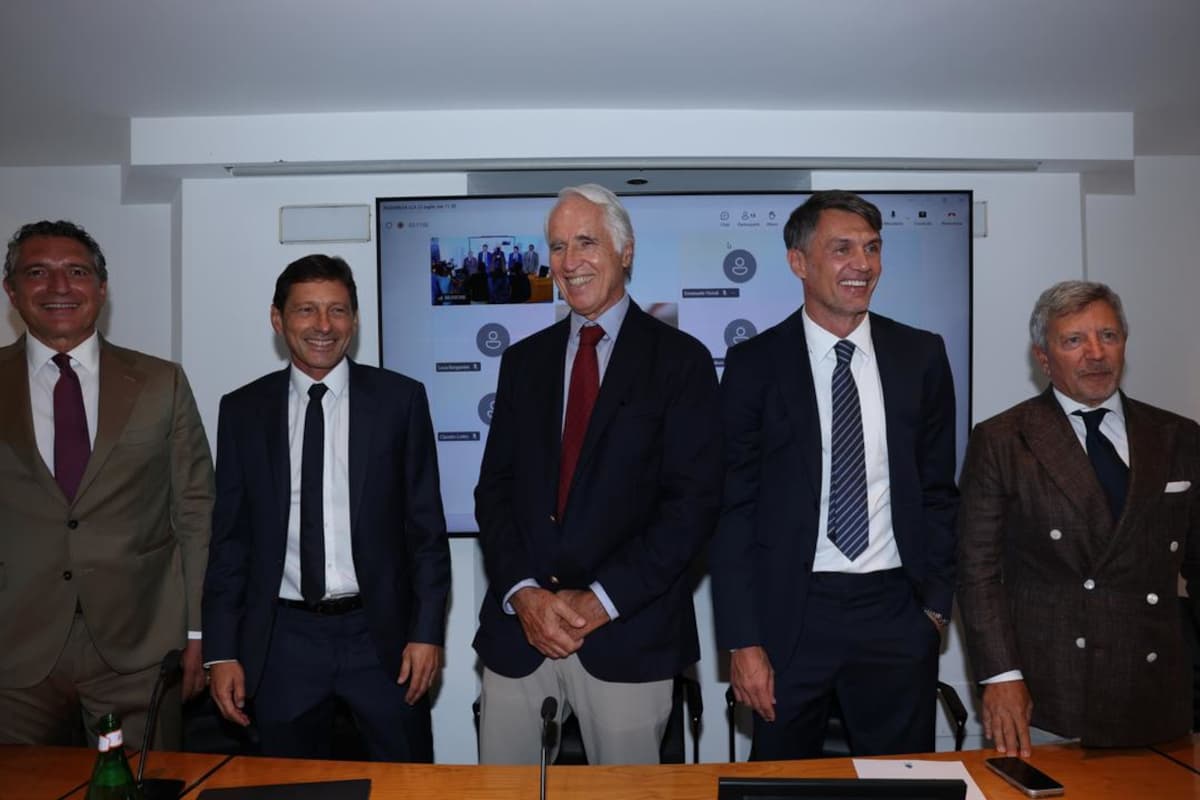
Italy technical director Paolo Maldini, special advisor Leonardo, FIGC President Giovanni Malagò and Lega Serie A President Ezio Simonelli (figc.it) It has since been confirmed that Claudio Ranieri will taking on the FIGC technical director role instead and that Mancini will return as head coach , a decision that has not gone down well with everybody across the board .
Speaking in an interview with La Repubblica , former CT Zoff admitted that he is still confused as to what the technical director role actually involves, especially if they do not have the final say over the appointment of the national team head coach.
“I’d like to understand, without causing controversy, what this role actually is,” Zoff pondered in an interview that came out on Wednesday.
ROME, ITALY – DECEMBER 18: Dino Zoff, former of SS Lazio attends the former SS Lazio player Felice Pulici funeral at Sacro Cuore of Cristo Re on December 18, 2018 in Rome, Italy. (Photo by Marco Rosi/Getty Images) He added: “When I was in charge, I had somebody like Gigi Riva acting as a director and ‘team manager’, it was a clearly defined and effective role.”
Zoff knows Maldini well and says that he is a true gentleman, but also admitted that his appointment as technical director of the FIGC was not the right fit.
“Clearly it wasn’t perfect,” he said. “I know Paolo, he’s a decent person and is very well-mannered. They (Maldini and Leonardo) must have had their reasons to leave. I won’t go into the merits of the job they did, I’m not the judge.”
And on the re-introduction of Mancini as Italy head coach, Zoff said: “Roberto is a man of great experience, he can increase the fortunes of our football and has already shown that he can win. The rest doesn’t matter.”
And on Ranieri, he said: “An extraordinary person, who always adds something extra wherever he goes.”
Source attribution: this article content is based on the linked publisher feed/source. Chance adds independent soccer context, impact analysis, entity links, and related news.
What happened
Former Italy goalkeeper and manager Dino Zoff has publicly questioned the organizational structure of the Italian national team setup, specifically asking what a technical director actually does. The comments come amid ongoing scrutiny of the FIGC's governance model. Zoff's remarks reflect a broader debate in Italian football about the clarity of roles and responsibilities within the federation. His questioning of the role highlights potential structural confusion at the top of Italian football administration.
Chance analysis
This is a governance/structural debate within Italian football rather than a tactical or team-news item. Zoff's public questioning of the technical director role suggests internal uncertainty about how the Azzurri are being managed, which could indirectly affect squad selection and long-term planning. For prediction systems, this has minimal direct impact on match outcomes but signals potential instability or transition in the federation's hierarchy.
No direct impact on team performance; signals potential uncertainty in Italy's football governance structure.
Governance commentary with no direct on-pitch impact; ignore for match prediction but note as background context on Italy's organizational structure.